
sleep and mental health
What time of day does anxiety peak?

Anxiety is often said to peak in the morning, but support-seeking conversations peak at 9pm and hit their low at 6am. Here's what that gap suggests.
People seem to reach out for support at night far more than in the morning, and that pattern complicates the popular story that anxiety is worst right after waking.
Key finding: Across all topics, support-seeking conversations in our dataset peak at 9pm and fall to their lowest point at 6am.
The morning theory has real biology behind it
Ask people with anxiety when it hits hardest and many will say first thing in the morning. They describe waking up already braced, the to-do list loading before they've sat up. Clinicians hear this often enough that "morning anxiety" has become its own category of self-help article.
There's a physiological basis for it. According to a 2022 Frontiers in Neuroscience review of the cortisol awakening response, cortisol rises sharply in the period after waking and then tapers off over the rest of the day. If anxiety simply tracked that hormone curve, you would expect the hardest stretch to come early, with things easing toward evening.
I went into this data half expecting to find that morning spike. I didn't.
What the timing data actually shows
One caveat first, because it matters for a headline like this one. The hourly figures here measure when people start conversations looking for emotional support, across every topic. They aren't filtered to anxiety specifically. Separating anxiety out by hour would take a topic-level query we haven't run, so what follows is a picture of when people reach out in general, not a direct measurement of when anxiety itself is most intense.
With that said, the pattern runs almost exactly opposite to the morning theory. Conversations peak at 9pm. They bottom out at 6am, which is right in the window where the cortisol account would predict people feel worst.
Some of the 6am low is obviously about logistics. Plenty of people are asleep, and those who are awake are often getting kids ready or commuting. But logistics doesn't explain the peak landing as late as it does. By 9pm most people have finished work and eaten, and the day's practical demands have mostly been dealt with. That is when the volume is highest.
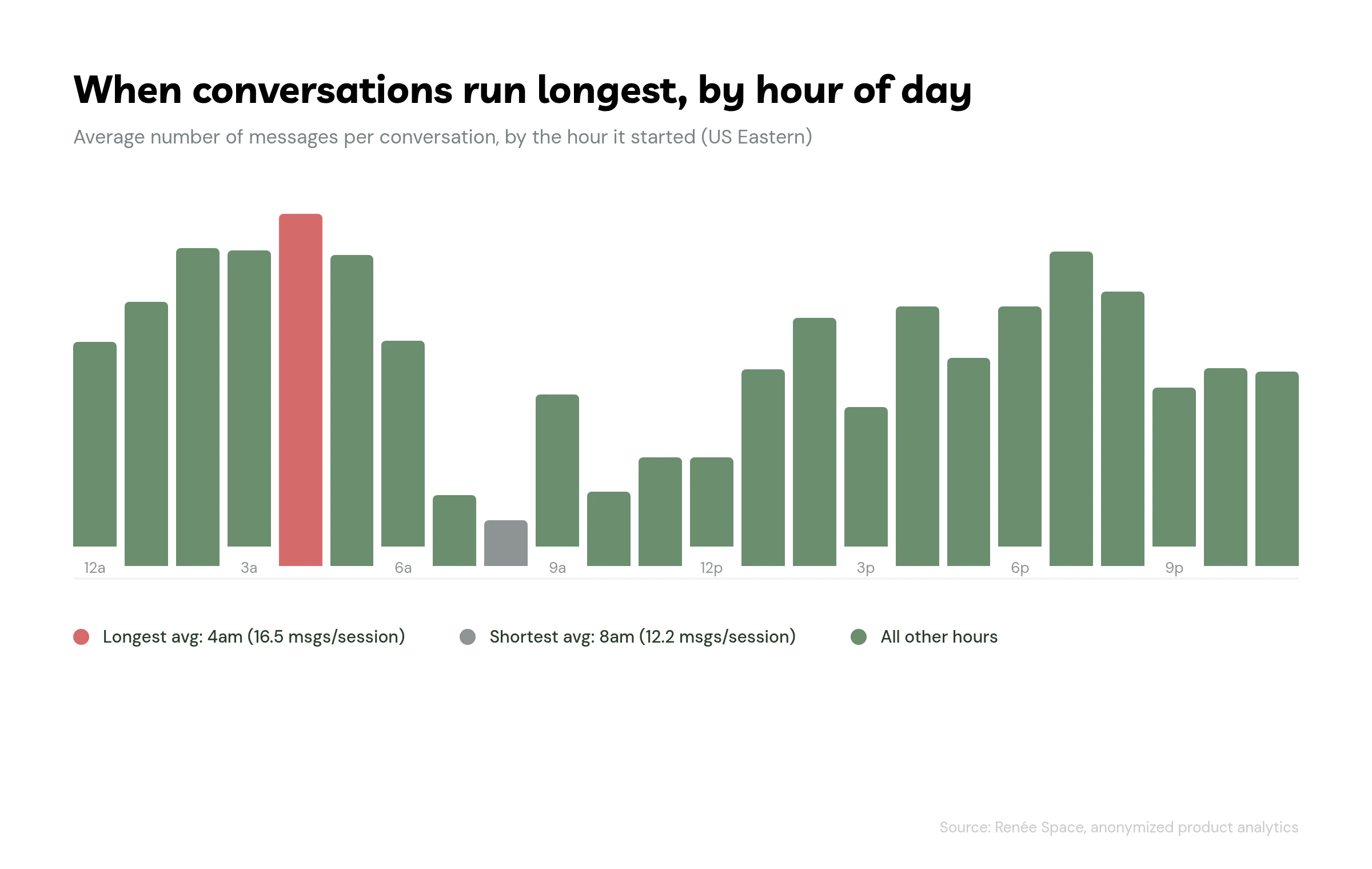
When conversations run longest, by hour of day
Reaching out is not the same as feeling worst
Let Renée help you

Advice
I feel stuck or unsure, and I could use some guidance to figure things out.

Talk it through
I find it hard to put my feelings into words, but talking will help me feel lighter.

Vent
Life feels overwhelming, I just need to let it all out (No unsolicited advice).

Fresh Perspective
I need someone to help me see things from a different, unbiased angle.
This is the part I find most useful to sit with. The moment a person feels most anxious and the moment they decide to talk to someone may be hours apart.
Morning anxiety tends to come with momentum. There's a shower to take and a train to catch, and the day hands you something to do with the jittery energy. Many people describe pushing through it more than examining it. Evening is different. The structure drops away, and whatever got pushed aside earlier comes back with nothing in front of it.
That fits with what Susan Nolen-Hoeksema's research on rumination describes: passively and repeatedly going over distress, a habit strongly linked to how depressive episodes start and how long they last. Rumination needs unoccupied time to run, and evenings supply a lot of it. A person can feel a sharp physical wave of anxiety at 7am and still not put it into words until 9pm, when they finally have both the room to think and the sense that something has been building all day.
So the 9pm peak may say less about when anxiety is strongest and more about when it becomes something a person wants to talk through.
Why the evening pulls people in
There's also a social side to the timing. Evening is when a lot of people are alone in a way they aren't during the day. Coworkers have gone home and the people who could be called have their own evenings going on. For someone living alone, 9pm can be the first point in hours with no one else around.
That changes what support even looks like. During the day, a worried thought can get handled in passing with a colleague or a quick text. At night those easy outlets are mostly gone, so the need doesn't go away, it just has fewer places to go. The concentration of conversations in the evening hours looks less like anxiety appearing out of nowhere and more like accumulated worry finding an outlet once the usual daytime ones close.
It's also worth being careful about what the low point means. A trough at 6am doesn't mean people feel good at 6am. It means relatively few of them are starting conversations at that hour, which could reflect sleep, routine, or simply the absence of any space to stop and reflect. The morning theory and this data can both be partly right, with the body's stress response running high early while the decision to seek help comes later.
What the timing tells us
What's been weighing on you today?


If you only ask when anxiety feels strongest, you get one answer, and much of the physiology points toward the morning. If you look at when people actually reach out for support, the answer moves almost to the other end of the day. In this dataset, support-seeking peaks at 9pm and drops to its lowest at 6am, a gap that suggests the hours when distress gets voiced are set as much by unstructured time as by stress hormones.
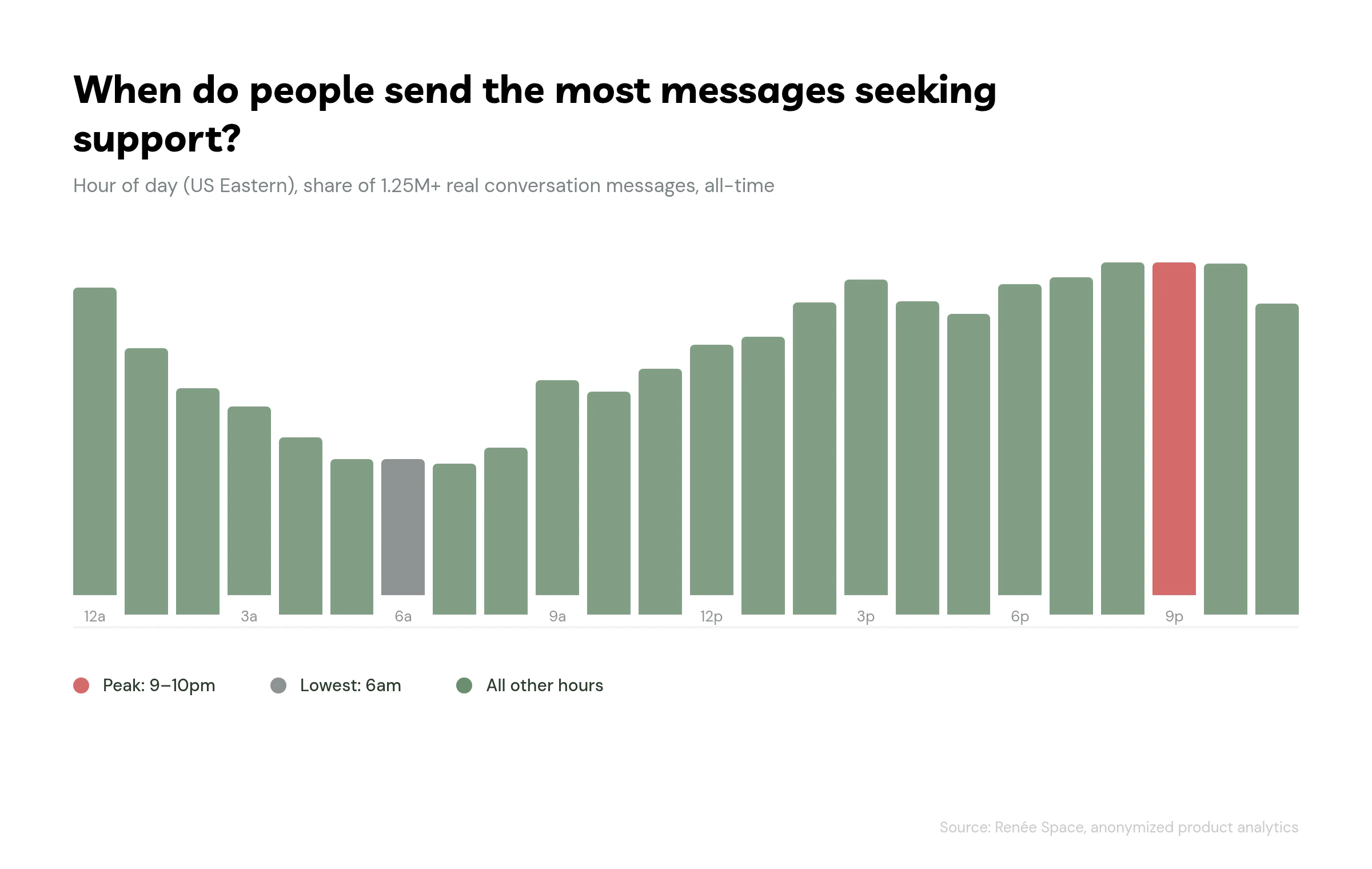
When do people send the most messages seeking support?
Methodology
This analysis draws on an anonymized dataset of real emotional-support conversations covering all time through November 2026. Roughly 94% of users are based in the US. Hourly figures reflect when conversations began across all topics and were not filtered to anxiety specifically. All results are aggregate and anonymized, and no individual conversations, quotes, or identifying details were used or reproduced.
